Having a Body and Being Human in Wild Times
July 8, 2026
“I’m doing everything right, but I’m still sick. What am I doing wrong?”

1. What does it mean to be healthy in an unhealthy world?
Many of us seem to intuit that it’s harder to stay well or feel energised these days, but it may also be true that we underestimate just how many people are struggling with their health. To give a sense of this in numbers, in 2026, three in five Australians, around 15.4 million people, are living with at least one chronic condition, up 18% since 2007. Two in five are now living with two or more conditions simultaneously, a figure that has risen 33% in the same period (Australian Government Department of Health, Disability and Ageing, 2026). Uncoincidentally, nearly half of Australians report experiencing burnout in the last year, with those aged 18 to 29 most affected, and a separate survey of over 1,100 Australian knowledge workers found 82% reported feeling burnt out, the highest rate among all countries surveyed.
Our sense is that these numbers underrepresent the full picture and for many reasons. Conventional reference ranges are often too broad to catch early or subclinical dysfunction, complex conditions like chronic fatigue remain poorly understood, we tend to exclude a whole swath of psychological, autoimmune and inflammatory conditions (like eczema or fatigue for example) because we somehow think they aren’t worth reporting, and, of course, humans are remarkably good at adapting to discomfort, disconnecting from our bodies and normalising symptoms.
Introduction
We hear this all the time, perhaps you’ve said it yourself, heard it from the mouth of a loved one, friend or client. It comes from that place in us that feels somehow it all works for everyone else except us, that maybe we’re irreparably defective, broken or somehow doing the right things wrong. Perhaps it brings up the feeling of overwhelm and helplessness that so often accompanies our health and healing struggles. If we aren’t too quick to see past it or be merged with its emotional stirrings, however, could the question itself be a clue into the deeper patterns unfolding for so many of us?
When we slow it down and sense into it, what we generally find is the right question turned upside down. What if this question was presenting an accurate suspicion just a misplaced one? That instead of probing at the health of our communities, societies, and environments, we’ve absorbed our suspicions solely within ourselves. Could the reason so many of us are asking this question point to something strange happening in our bodies and worlds, pointing to a radically shifting context wherein health itself is increasingly elusive, slippery and perhaps making us feel worse?
It seems many of us are caught in a bind: on one hand we’re experiencing more chronic, mysterious and precarious health conditions than ever before, and on the other, we’re asking whether a life of restriction or one so obsessed with health is really a healthy life at all. We’re caught in a time between worlds, as Zak Stein puts it, trying to live a life that no longer exists.
So, in these unruly times so saturated with industry, lobbying and profit maxing motives, whether it wears the face of the pharmaceutical lot or that of wellness capitalism, we need more helpful ideas and approaches to health.
Our natural state is one of healing. However, our contexts have changed so radically, especially in the last 50 years, that we need new and more clarified ideas of what it means to be healthy in this wild (or characteristically less wild) world of ours. Most significantly, our holistic approaches need to get radically more holistic if they’re going to support us in finding relief from not just our symptoms, but the deeper subterranean patterns giving rise to inflammation in our personal and planetary homes.
Our desire for this first piece is to give name to the dynamics we often feel, but have no language for. First, we’ll map out the context we’re living through to support our understanding of what might be contributing to our struggles, whether that be with our mental health, our weight, skin issues like acne, rosacea and eczema or autoimmune conditions, chronic fatigue, our loneliness, purposelessness and our stress. We then work through how we approach and see the body, the holding pattern keeping most of us sick (what we call The Depletion Pattern) and then move to supporting you in holding new perspectives that themselves have the power to generate healing.
Ultimately, we see that health is a set of capacities that allow us to have more agency over our lives, more aliveness and more contact with who we most essentially are. This is by no means is a resignation to chronic illness and we believe most fundamentally that all can heal given the right support. It’s more that this framing, releases us from having to ‘achieve’ a specific state of health and allows health to be something available freely to all of us in every moment.
In any case, these statistics are not just indicative of an increase in diagnostic testing, but point to systemic shifts in our personal and collective context.
Our context has changed and for very relational beings like ourselves, this means we have changed also, but it seems our health systems, conventional and alternative, are not meeting us in this new territory.
The truth is that we are living through a period of uncertainty on every level of our personal and collective lives that has no easy precedent and no simple map. Part of this evolving context includes the rapid acceleration and increase in depression, chronic inflammation, autoimmune diseases and emerging hypersensitivity conditions that require a far more complex, adapted and personalised approach than previous times called for. It is also true that this rise in chronic health conditions is not separate from the other crises we see in the world whether they be environmental, economic, cultural, geopolitical, psychological or technological.
One way of seeing how they all converge is through a framework some call the metacrisis, which speaks to how all these crises are but symptoms of a deeper fracture at the level of how and what we percieve as goodness, beauty and truth.
From this perspective, the ‘root cause’ of your chronic condition (i.e your acne, your fibromyalgia, your Hashimotos disease, your chronic UTIs, your low testosterone, etc), is not only gut dysbiosis, circadian rhythm disruption, toxic overload, nutrient deficiencies, stress, trauma and the like, but a result of inhabiting (being alive in and entangled with) our post industrial world.
To help this land, let’s take the example of an imaginal client, Lydia, who came to us wanting to lose a little weight and feel more juiced up, more energised, find her spark again.
In the past, this kind of goal would have been straightforward to support because the underlying biology of most people was relatively unencumbered. Walk more, resistance train two to four times a week, eat mostly whole foods, prioritise your sleep, connect with loved ones, do more of what you love, get outside with your feet on the earth as much as possible. Simple, low-cost, straightforward, extremely effective.
These foundations are still that, foundations, and are essential for all of us, but the same journey for Lydia today, should she wish to regain her health, is now far more complex.
So what’s happening?
Lydia already checks off most of the common holistic advice. She eats mostly wholefoods, moves when she can and has a relatively social, outdoor and active lifestyle. And yet, she still feels inflamed and lacklustre. She has rosacea and food sensitivities, she has aches and pain in her joints and though she’s exhausted by the evening, she struggles to sleep deeply and wake up refreshed. Her GP has run bloods and found “nothing remarkable” out of range, perhaps given her a course of doxycycline to clear her skin. Unsatisfied and after some digging online, she decided to try a more natural route, first buying supplements with long lists of ingredients promising probiotics and gut-transformation, then FODMAP protocols, perhaps a keto diet or a medical medium cleanse, a few sessions with a naturopath, expensive pilates classes, therapy and breathwork. Some things helped briefly, some did nothing despite the before and after photos sprawled over websites she bought from. Some things even made her feel worse. She’s not just exhausted by her symptoms, but by the effort of trying to get well, and has, understandably lost trust in both conventional medicine and the alternatives.
Her issue is not a lack of resilience, effort, access or even information. It’s that the accumulative weight of all the unintended consequences of our post-industrial and late modern context, are weighing on her psychobiology, remixing her body’s innate capacities to detox, regulate, heal and restore.
There’s a famous Jiddu Krishnamurti quote that says “it is no measure of health to be well adjusted to a profoundly sick society.” While this mightn’t land as true as it once did given what we know now about the intelligence of our survival adaptations or ‘adjustments,’ Jiddu does speak truth to the flip we’re asking readers to make. You can visualise this in the image below, a four quadrant compass to see the different dimensions of health. Most healthcare systems, even holistic ones, tend to focus solely on the upper right quadrant, and though what we eat, how we move and how we live is essential to our health, it is but one part of a much wider picture informing our health.
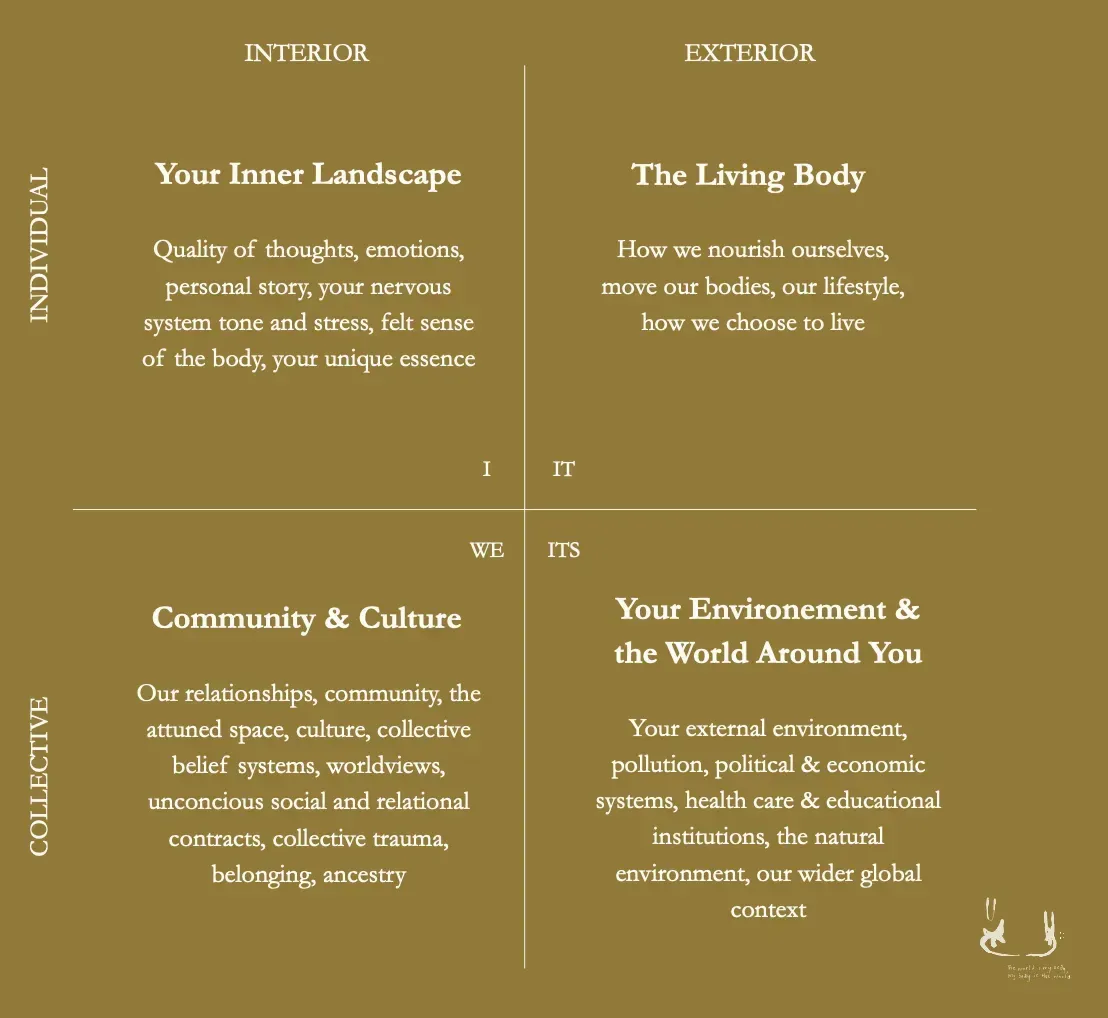
This is our version of the AQAL framework taken from Ken Wilber’s amazing work on Integral Theory.
2. Our post-industrial and late modern context
Let’s understand the terrain a bit better.
The term anthropogenic illness describes illnesses shaped not by nature, but by the conditions our own civilisation has created. Think of it less as disease in the traditional sense and more as the biological and psychological cost of modernity’s unintended consequences.
Our ‘loads’, the accumulation of these burdens on our being, are something we pass down generationally. New generations are feeling the compounding effects of unmetabolised grief and trauma, collective and personal stress, the antibiotic burden on our microbiomes, light and environmental toxicity, disconnection from nature, the breakdown of close community and belonging, industrialised diets, the widespread use of glyphosate, and increasingly sedentary and indoor lives (to name but a few).
We are, in this sense, living inside the accumulating consequences of decisions made across multiple generations, most of which were never understood as health decisions at the time, but rather as progress.
Progress, as it turns out, has second and third order effects, which is what we’re describing here as modernity’s unintended consequences.
The examples are plentiful:
- Non-stick pans may have made your eggs slide off more easily, but the PFAS chemicals (also known as forever chemicals) used to create that coating have been found in the blood of most people tested, are linked to hormonal disruption, thyroid dysfunction, elevated cholesterol, and certain cancers, and do not break down in the body or the environment.
- Antibiotics (and sanitisation) saved lives and also began decades of microbiome disruption.
- Agricultural chemicals like glyphosate increased food yields (although even this is debatable) in the short term but consequently destroyed the soil, the microbial life that determines the health of the world, and entered our food chain, our water, our soil, the air we breathe and our bodies.
- Artificial lighting extended our productive hours past sundown but has had significant impacts on the circadian rhythms that regulate almost every hormonal and metabolic process in our bodies.
The list could go on and on. The costs of each of these gains were externalised, passed onto the environment, onto marginalised populations, onto future generations, and, unmistakably, onto our own bodies.
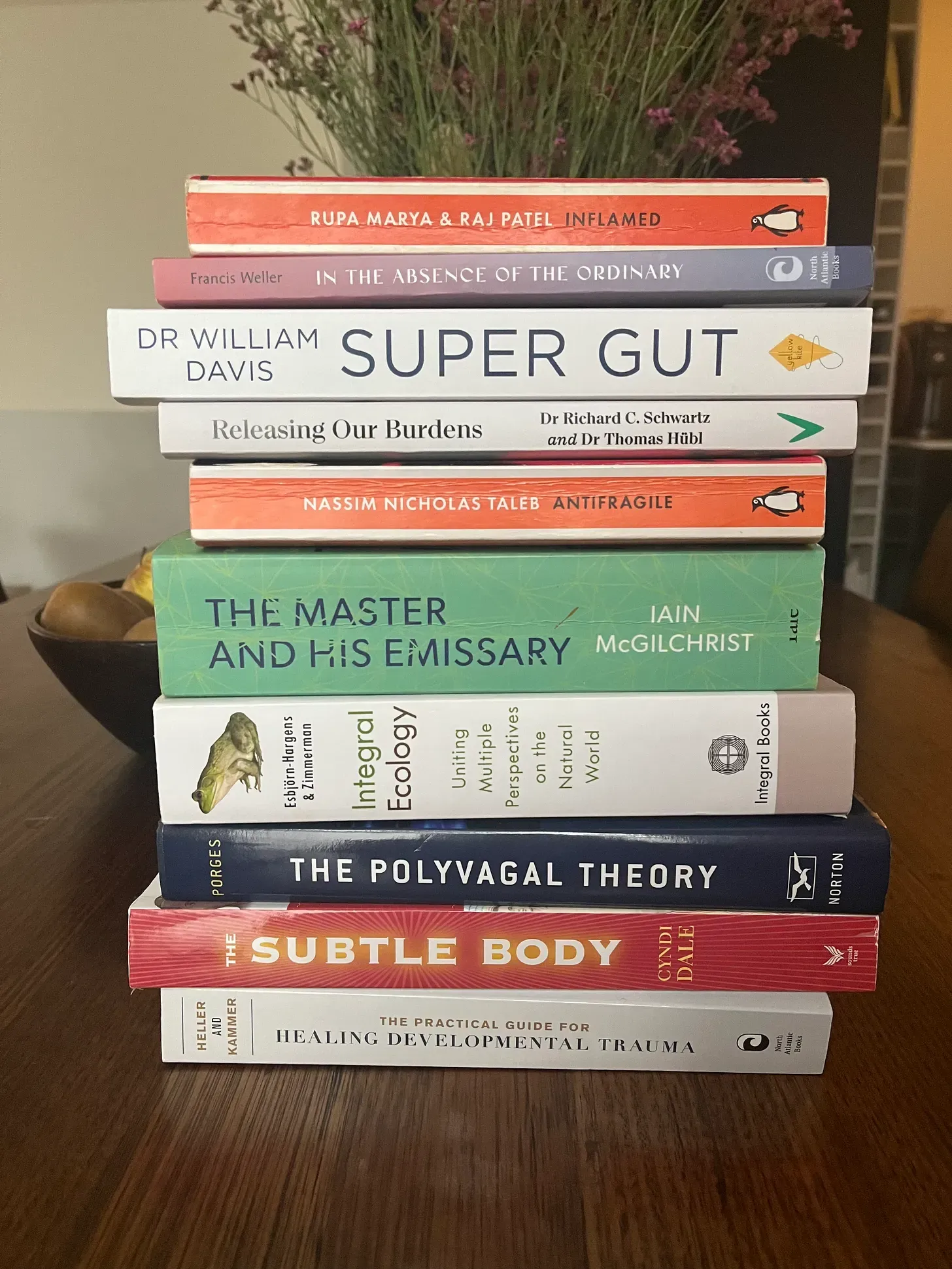
Sitting at the heart of this tangle is our increasingly impoverished microbial ecosystem, catastrophically depleted through the unintended consequences mentioned above and including things like sanitation and sterilisation, the contents of our tap water, our diets, our increasingly indoor and urban lives and other factors. Despite the proliferation of gut health supplements and fermented foods, few of us appreciate how much we depend on and are defined by the intricate microbial communities living within and on us, partly because we know as much about the microbiome as we do about the cosmos (virtually nothing), and partly because Western culture has historically struggled to value things that are microscopic and that challenge our ideas of individuality. Rupa Marya and Raj Patel write in Inflamed that gut microbes harmonise our bodies with the surrounding ecology, and when that environment is harmful, inflammation follows (2022, p. 133). They go on to explain how the microbiome reveals our deep entanglement with social structures, industry, and ways of being with nature, and how colonialism in particular has disturbed our internal ecologies.
Species present in pre-industrial human guts are simply no longer being found in modern populations, meaning the communities of trillions of microbes we co-evolved with can no longer be found within us. Much of what we experience as unstable mood, brain fog, emotional fragility, destructive thought patterns, depression, nervous system dysregulation and the felt inability to hold complexity without collapsing, is downstream of this impoverished ecology. The faculties we most need to navigate a genuinely difficult moment in history may themselves be quietly compromised by disruptions we are only beginning to understand. So, as it turns out, we are in fact not who we think we are.
Again, this is not about the body lacking resilience. (In fact it’s a testament to the sheer robustness of our systems that we’re able to withstand much of this toxic overload and disconnection from each other and nature). It is more that we have developed a kind of hypersensitivity due to these inputs and patterns of modern life. We have all heard those anecdotes about lifelong smokers who lived into their late nineties, or stories many of our parents tell of eating whatever they wanted without issue. Given the sheer accumulation of inputs now interfering with our biological rhythms, detoxification processes, and resting and resetting systems, layered onto generational load, even light inputs of key nutrients can trigger a flare in someone sufficiently depleted, let alone gluten, alcohol or cigarettes. The truth is that smoking is likely to have a far worse outcome for current and future generations than it did for our grandparents.
This is why what used to move the needle on someone’s health is now, for a growing number of people, largely ineffective unless a radically integrative, nervous system-oriented and context-driven approach is taken. We will increasingly have a generation of people who have tried everything for their health and still struggle with basic functionality.
The inflammation, mental health issues and burnout many of us are experiencing are not isolated physiological problems and it is crucial we do not blame ourselves or each other for how our bodies are struggling. As confusing as it may sound, these symptoms are, in part, intelligent responses to our world on fire.
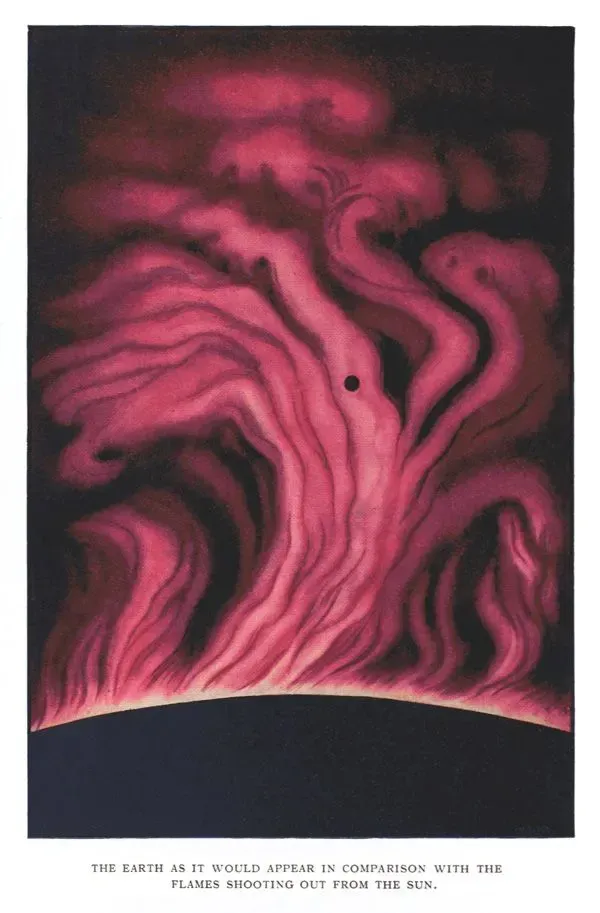
The Earth as it would appear in comparison with the flames shooting out from the sun
3. Seeing the Cycle: The Depletion Pattern
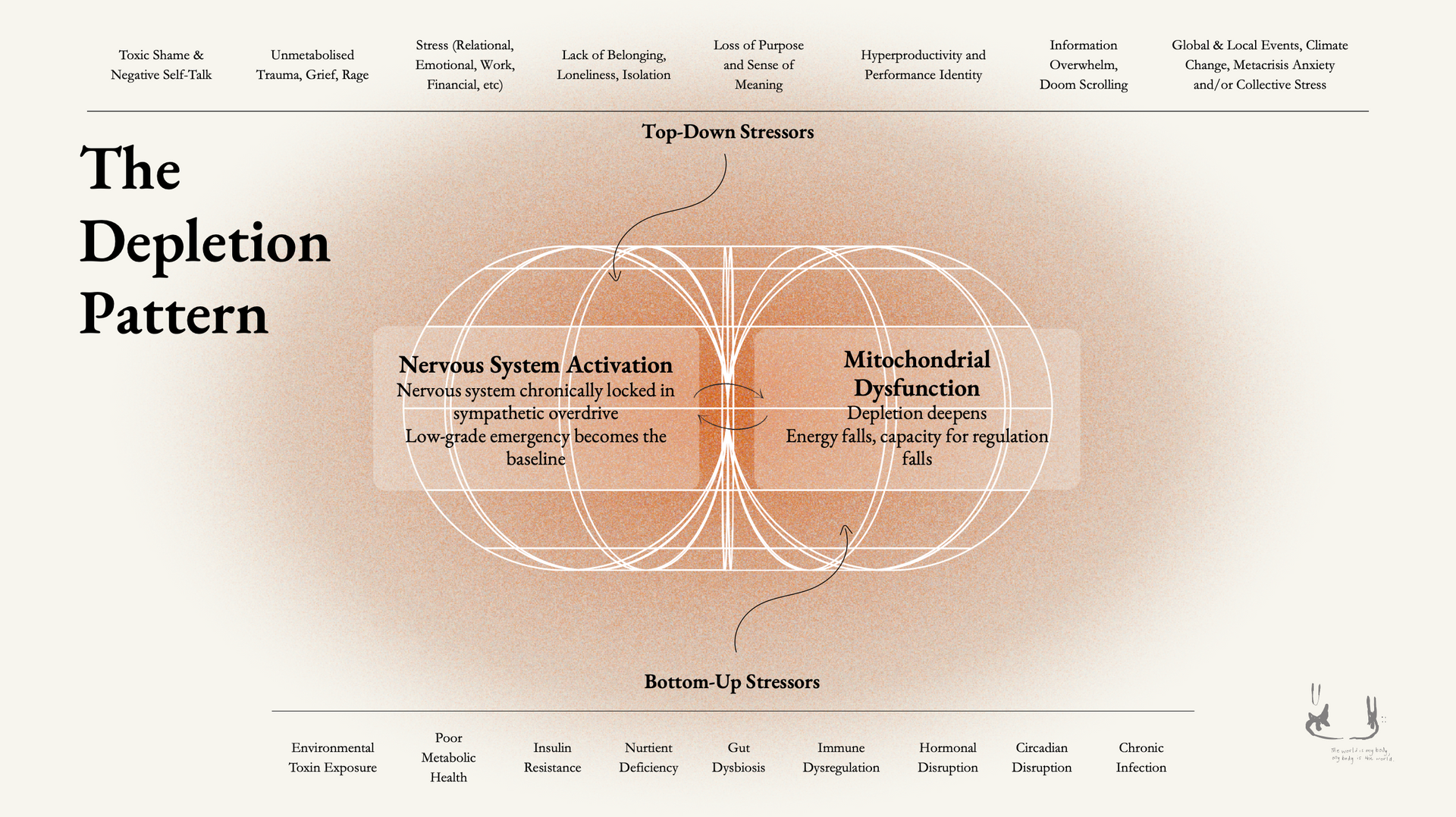
The Depletion Pattern diagram
Now that we have some grounding for how our contexts have changed, let’s look at the specific dynamics we’re seeing that might be at the heart of why you can try everything and still feel sick, or even, feel worse.
Perhaps some of these symptoms are familiar to you:
- Tired but unable to wind down or switch off
- Constant fatigue and low energy
- Addictions and dopamine patterns seeking stimulation
- Wellness practices like meditation or breath work that feel destabilising rather than helpful
- Anxiety, depression, negative self talk, toxic shame or low mood without an obvious cause or story
- Brain fog, poor concentration, slow thinking, feeling numb and/or dissociated
- Heightened reactivity and irritability where small stressors feel disproportionate
- The feeling of reacting to life rather than responding, of feeling life is happening to you rather than being co-created by you and what you most want for yourself
- Slow recovery after stress, exercise, exertion or illness
- Disrupted, fragmented and/or shallow sleep
- Night terrors and/or sleep paralysis
- Low libido
- Food sensitivities, gastric discomfort, food cravings, and/or loss of appetite
- Hair loss
- Trouble losing/gaining weight
- Rashes, acne, rosacea, eczema, psoriasis, or other skin issues that don’t go away by excluding gluten, dairy and sugar
- A sense of doing everything right and still feeling worse
If several of these feel true for you, then you’re likely in what we call a Depletion Pattern (and in this you’re not alone), a framework we’ve adapted from physician Dr. Scott Sherr’s work on the Sympathetic Spiral of Doom.
So what is the depletion pattern, exactly?
Most of us understand cause and effect as a straight line: one thing happens and it produces one result. The body’s stress response doesn’t work this way precisely because it is a complex system running on unique feedback loops, where the output of a system becomes its own input, and small disturbances can grow into further complexities. (Don’t worry, it’s hard to understand because it is complex, mysterious and emergent by nature!).
The diagram maps the core loop sitting at the centre of much chronic illness, energetic and/or emotional distress and inflammation: a feedback relationship between the nervous system and our mitochondria, the tiny organelles inside almost every cell that produce the energy powering everything the body does, including the work of healing itself. (Fascinatingly, mitochondria themselves evolved from ancient bacteria billions of years ago).
When the nervous system is chronically activated by what we might call top-down stressors (i.e. toxic shame and negative self-talk, unmetabolised trauma, grief and rage, relational and financial stress, loneliness and lack of belonging, loss of purpose and meaning, hyper-productivity and performance identity, information overwhelm and doom scrolling, and the broader weight of global events, climate anxiety, and collective stress, etc) it prioritises defence over repair. Energy is redirected toward vigilance and away from rest and regeneration. Over time, this constant energy demand impairs mitochondrial function itself and the cells produce less energy less efficiently, deepening the depletion pattern.
Conversely, a body with depleted mitochondrial energy due to bottom-up stressors (i.e. anything from environmental toxin exposure, poor metabolic health, insulin resistance, nutrient deficiency, gut dysbiosis, immune dysregulation, hormonal disruption, circadian disruption, and/or chronic infection, etc) has less energy to heal and less capacity to regulate its own nervous system. Coming back to calm after stress, resting and actually feeling rejuvenated, responding to life rather than reacting to it, all of this requires energy. Healing requires energy, even sleep requires energy. Without it, the nervous system stays activated by default, not by choice and low-grade emergency becomes the baseline, which suppresses mitochondrial repair further still.
Each side of the loop reinforces the other leading to what we might understand as a downward spiral.
This is why isolated interventions so often fail to restore and transform us. A nervous system regulation practice introduced into a mitochondrially exhausted body may not land precisely because there is not enough cellular energy to use it and in some cases it can stir unmetabolised material the body was not ready to meet. A nutrition, supplement or detoxification protocol introduced into a body with a chronically activated nervous system may worsen someone’s symptoms as the body is not in a state to metabolise dislodged toxins and debris. Both sides of the loop need tending to, often simultaneously, strategically and subtly, for either to move.
4. The relationship between different stressors
Whether you’re far along the path of healing or you feel that you’ve just began, a good question to circle around is what actually is the body and where do you see the boundary of your body and the world? This marks one of the central provocations for our practice World::Body: “from the perspective of our cells, where does our body end and the world begin?” The same question could be asked from the perspective of the air you breathe, from the microbes that mediate much of how you experience reality and from the fungi living underneath your toenails and in our soil.
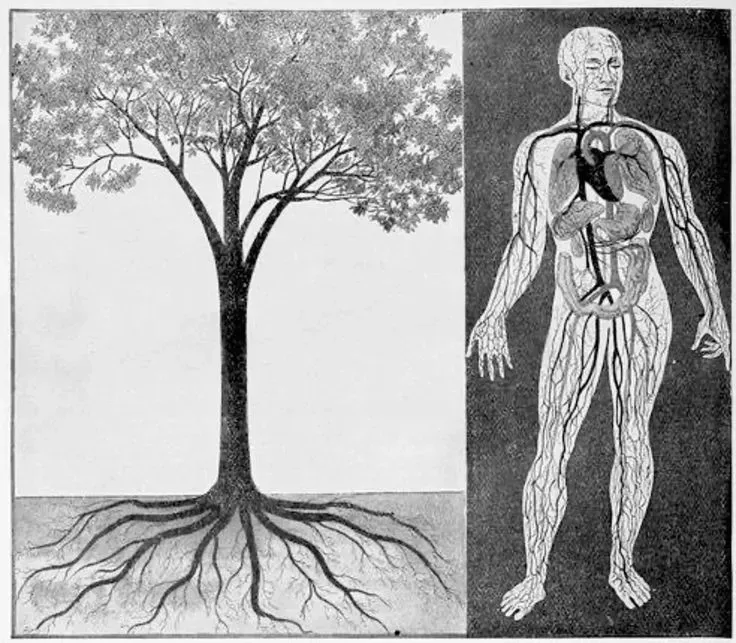
We tend to think about health stressors as individual inputs, each assessed and targeted on their own reflected in all the different health professionals one might see in their lifetime from dentist, to gastroenterologist, to physiotherapist to psychologist. This is born of a particularly strange and persistent way of attending to reality, one where we see the world as isolated things and parts rather than wholes, systems, relationships and ecologies. As you can see from the Depletion Pattern, you can’t separate a human from their context, from the stories of their ancestors or the supply chains that bring their food to their fork.
Importantly, there are many wonderful thinkers including the likes of Daniel Schmachtenberger and Iain McGilchrist, who clarify that it is this very reductionist view that belies the reason we’re so sick and growing sicker. Only from a reductionist view (a narrow-boundary perspective) do we not account for the consequences (or externalities) of a particular intervention. If we see things more holistically, we get far less collateral.
Nothing exists in isolation and things only become what they are through their relationships. From this perspective we can understand with greater depth the way in which the top-down and bottom-up stressors in the depletion cycle interact and amplify each other rather than just simply being ‘additive ingredients’ that need more ‘additive ingredients’ (i.e. 10+ ingredient supplement formulations, each dose being too low to even have a therapeutic impact).
Take mould and electromagnetic fields as one example. Mould is a normal feature of our natural environments and in its natural state plays an important ecological role. Mould under stress, however, produces mycotoxins as a chemical defence. Clinical researcher Dr. Dietrich Klinghardt has documented findings from a Swiss laboratory experiment in which mould cultures grown inside a Faraday cage, shielded from ambient electromagnetic radiation, produced low levels of mycotoxins. When the cage was removed and the cultures were exposed to the ambient electromagnetic environment of the laboratory, mycotoxin production increased dramatically. The mould, perceiving the electromagnetic field as a threat, mounted a chemical defence response, the kind that in our human-built environments is contributing to extreme symptoms in many bodies.
This is a single example of a much broader pattern: Gut dysbiosis impairs the liver and detoxification pathways that would otherwise help clear environmental and endogenous (something made within us like the toxic byproducts of microbes) toxins. Circadian disruption from artificial light degrades sleep, degraded sleep impairs immune regulation, which increases susceptibility to infection, which further burdens an already strained system. Chronic psychological stress elevates cortisol, which suppresses digestion, which reduces nutrient absorption, which depletes the very resources the nervous system needs to regulate the stress response. Each factor worsens the conditions for every other factor, producing a cascade of consequences for our internal systems.
It’s important to remember at this stage that healing is our fundamental state and a birthright for all beings. The same reinforcing feedback loop that explains how we run ourselves into the ground also holds the blueprint for a positive feedback loop, what we call a healing cycle, which we will cover in following pieces.
5. Illness is your Doorway
“What if the way we respond to the crisis is part of the crisis?” asks Bayo Akomolafe, stirring an important provocation for the health and wellness space that is fraught with the language of ‘fixing.’
The proliferation of contradictory approaches to healing (e.g. all the different diets out there, keto, carnivore, vegan, fasting, etc) is itself a meta-symptom of a healthcare context that is sick. The reason there are so many of them and the reason each one seems to work for some people and not others, is that we’re all taking one facet or fractal of an extraordinarily complex and rapidly shifting picture and treating it as the whole.
Both the conventional biomedical health care model and the wellness industry’s dominant response to this complexity has been additive: when something “is not working”, add more. Another drug prescription, antibiotic, supplement, another protocol, surgery, a new form of birth control, a new health-tech device, a holiday, a new job, an SSRI, a new partner or set of friends. This logic works when a system has the psychobiological resources to integrate new inputs (and even then it's highly flawed). When it does not, adding more increases the burden rather than reducing it. Many people, including ourselves, discovered this through our own experiences with chronic inflammation, finding that everything we tried either made no impact or made things worse. It’s not that you’re doing it wrong, its that the whole approach is categorically too simple for the kind of contexts we’re living through. In fact, it misses the whole scope of what it means to be embodied and live a healthy life!
Our very obsession with health is a symptom of our confusion and disconnection from the natural ecologies of which we are a part. Only in this context of planetary unravelling, biodiversity loss, the distortion of meaning and the breakdown of community does our current operating health care system and wellness capitalism make any sense at all. “An even more troubling question to ask” writes Bayo following the thread, “is, what if ‘crisis’ is the ‘wrong’ way to think about the challenges we face?”
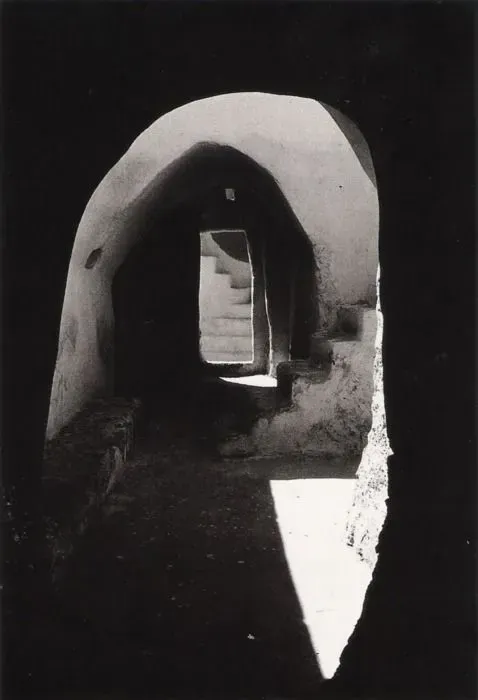
So, is our illness a crisis? Or is it a rite of passage, a transformational threshold to be held with reverence and respect? Does sickness itself contain the latent powers of healing? Without the dark tunnels and loss of our intuition, do we really know what it means to savour this strange, mysterious and precious life?
A perspective that has greatly helped ourselves and our clients move through the healing process is seeing illness less as a problem to be fixed and more of a doorway through which we come into closer contact with who we most essentially are, what we most want for ourselves and what’s getting in the way of that connection and clarity.
Moreover, the adaptations that produce depletion and sickness are never malfunctions. They are intelligent responses to real conditions, carrying their own logic often rooted in survival. Nervous systems that are short circuited in a sympathetic tone learned once that switching off was not safe. Our bodies harbouring inflammation, tension or an immune system in overdrive, are signs that we have been working very hard, for a very long time.
Illness is an invitation to see things differently, just as grief, loss, loneliness, heartbreak and pain are too. Your symptoms are a doorway into a different way of relating to life. Meeting these signals with curiosity, even when fear, doubt or shame are also present, is an important place to begin. Often our symptoms are parts of us trying to communicate, to feel heard, met, and seen, and what we most want for ourselves at the deepest level is exactly this: intimacy and contact with all of who we are. Our approaches to health need to hold this with warmth and curiosity and a willingness to learn from what our somas are sharing with us. Though we seem to have lost the taste for in our uniquely adolescent culture of progress, personal gain and positivity, the initiatory power of darkness is latent in illness. Quite paradoxically, it has the power to pull us out of our striving for survival and into the meaning and meaningfulness which saturates reality.
Psychotherapist and grief ritualist Francis Weller has spoken at length about this age we’re living through, a period he calls the Long Dark, which he understands as a necessary catalyst for the enrichment of soul and of coming back home to beauty, truth and goodness. “To know soul” writes Weller, “is to feel our wild entanglement with all things, revealing our ongoing relationship with the anima mundi, the soul of the world.” To see our bodies in relationship with the world, with the many microbes we’re bound to and the ecological contexts we’re born of, is a necessary passage in the process of healing.
Now, this by no means our resignation to chronic illness and a life riddled of symptoms and constriction, our lack of hope for healing modalities, the deep and real need for relief and the trust we hold in the body’s capacity to heal. In fact, it’s when we really name our suffering, our discomfort and ask for support that part of the healing begins. The truth is that we can heal because it is our body’s natural state, we’ve seen many people completely turn their health around as we have our own.
Part of wayfinding through these wild times is by reengaging with what health means for you. It’s something that is available to all of us in every moment and speaks to more of our capacity than of an unattainable state. Health is having more agency over our lives, more aliveness and more contact with who we most essentially are. Health, after all, is not a destination, and as Cynthia Bourgeault exclaims “how you get there is where you’ll arrive.”
This is where we will pick up next. In part two of this series, we turn from seeing the pattern to working with it directly: what it actually takes to move from depletion toward vitality, and why the same feedback loop that runs us into the ground can be turned, deliberately into a healing cycle.
As David Abram articulates, “And so we find ourselves immersed, once again, in the terrifying beauty of a world that exceeds all our knowing.”
Sources
Australian Government Department of Health, Disability and Ageing. (2026). National Strategic Framework for Chronic Conditions 2026–35. Australian Government. https://www.health.gov.au/sites/default/files/2026-03/national-strategic-framework-for-chronic-conditions_0.pdf
Beyond Blue. (2024). Burnout community poll. https://www.beyondblue.org.au/about/media/media-releases/1-in-2-Australians-Facing-Workplace-Burnout
UiPath. (2024). Global Knowledge Worker Survey. https://www.uipath.com/newsroom/uipath-unveils-global-knowledge-worker-survey-findings
Sherr, S. (n.d.). The sympathetic spiral of doom. Troscriptions. https://troscriptions.com/blogs/main/the-sympathetic-spiral-of-doom
Anttila, K. (2000). Mycotoxins, fungus and “electrohypersensitivity.” Medical Hypotheses, 55(3), 208–214. https://doi.org/10.1054/mehy.1999.1045
Wilber, K. (2000). A theory of everything: An integral vision for business, politics, science, and spirituality. Shambhala Publications. [For AQAL framework reference.]
Hyman, M. & Schmachtenberger, D. (2025). Why chronic disease is exploding! | Daniel Schmachtenberger [Video]. YouTube.
McGilchrist, I. (2009).
The master and his emissary: The divided brain and the making of the western world. Yale University Press.
Marya, R., & Patel, R. (2022).
Inflamed: Deep medicine and the anatomy of injustice. Penguin Books.
Akomolafe, B. (n.d.). These times are urgent. Let us slow down. https://bayoakomolafe.net
Stein, Z. (2019). Education in a time between worlds. Bright Alliance.
Weller, F. (2015). The wild edge of sorrow: Rituals of renewal and the sacred work of grief. North Atlantic Books.
Bourgeault, C. (2020). Eye of the heart: A spiritual journey into the imaginal realm. Shambhala Publications.Abram, D. (1996).
Abram, D. (1996). The spell of the sensuous: Perception and language in a more-than-human world. Pantheon Books.
Krishnamurti, J. (n.d.). “It is no measure of health to be well adjusted to a profoundly sick society.” [Widely attributed].
Meet World::Body
Our approach to health begins with a foundational belief: that healing is your body's natural state. From this perspective, our work goes far beyond conventional personal training and health coaching.
Rather than fixing the body or adding unnecessary complexity, we listen to what the body is already communicating, clear what obstructs its natural intelligence, and rebuild the conditions for sustained flourishing. We draw on functional science, nervous system understanding, movement and nutrition medicine, our own journeys and years of experience working with clients across the full spectrum of health and healing.
We work with you to build a genuinely healing relationship with your body, holding the wider context of your relationships, rhythms, environment, and sense of meaning as part of the work.